

Bridging Vision and Reality: Verifying the Potential of a Shaped Idea Through a Proof of Concept


Table of contents:
- Understanding the Proof of Concept
- Difference between Proof of Concept and Minimum Viable Product (MVP)
- Practical Examples of PoC
- A Real-Life Case Study
- Choosing Functions to Test in PoC
- How to Verify Your PoC
- From PoC to MVP: Validating Your Value Proposition
- Recommended Readings and Conclusion
- What role can a venture builder play in shaping your Proof of Concept?
Understanding the Proof of Concept
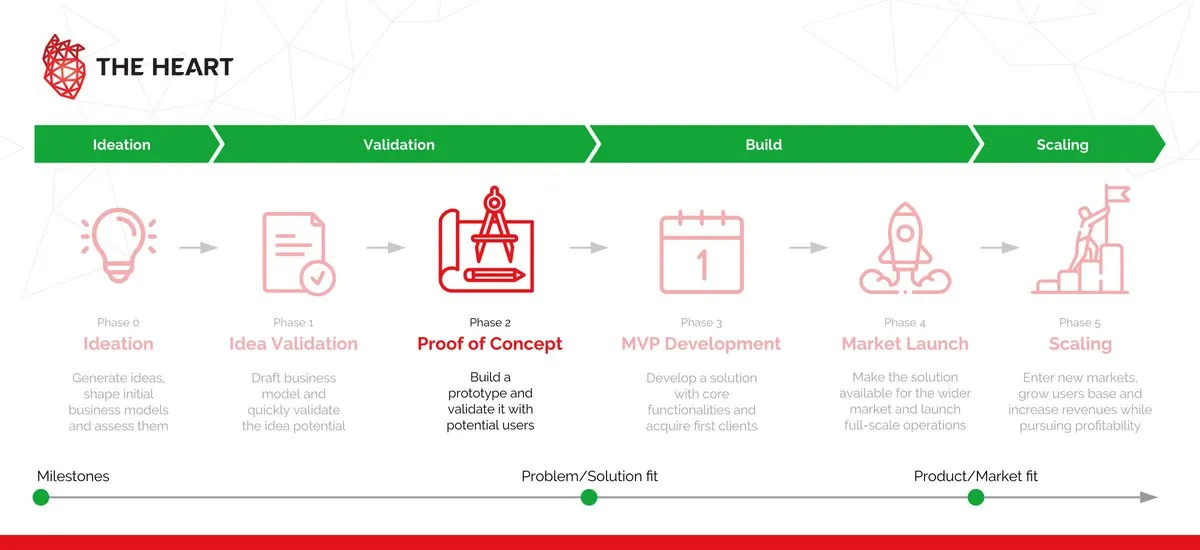
A Proof of Concept (PoC) is essentially as small as possible experiment to test your product idea. It helps to understand whether the hypotheses created at the workshop about your product are correct. It is about creating a simple version of your idea that is neither too costly nor too complex but enough to verify if the idea has a potential discovered in previous phases.
Difference between Proof of Concept and Minimum Viable Product (MVP)
While a PoC is about testing the concept's feasibility, an MVP is about testing the product's market viability. They both play critical roles at different stages of the product development lifecycle and help in mitigating risks, saving time, and ensuring that the product is aligned with the market needs and demands. MVP we will explore more in our next article, as an MVP is the natural next step after a successful PoC.
Practical Examples of PoC
To give you a better sense of what PoC can look like, let’s review some practical examples that you can conduct with your team in the PoC phase:
- UI Mock-up in Figma: Creating a user interface mock-up in Figma and presenting it as a slideshow can give users a feel of a working app without building one. At the point when they have the impression that it is a functioning application, you can ask them if it meets their expectations, if it solves their problems, and what they would potentially change in it.
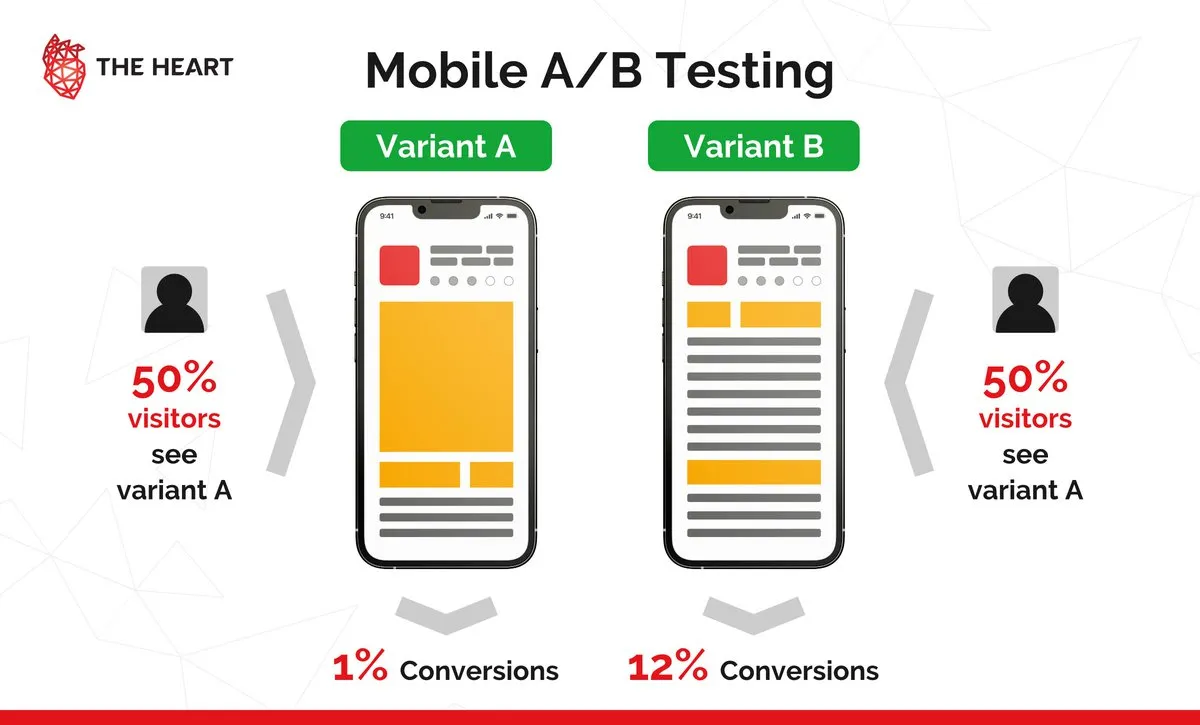
- Landing Page: Design a webpage that explains your product and invites users to leave their email for updates. This helps to measure the interest in your product. You might even create two different versions of the “dummy” Landing Page to present to distinct target groups (A/B testing).
- No-code/Low-code Tools: Develop a simple app using tools like Webflow and Bubble that require little to no coding experience, giving you a basic version of your solution in a few hours I will write more on this topic in the next article.
A Real-Life Case Study
To share a personal experience, I helped a medical company that manufactures endoscopes to create a tracking system using WordPress. Within hours, we had created a platform that simulated a full-fledged solution for tracking equipment repair statuses. It appeared fully functional, even though updates and notifications were handled manually based on daily reports sent to me in an Excel file from a service department.
The goal was to convince the sales department that such a tool would alleviate their workload. Up until that point, they had been the ones updating their clients on the current status of the endoscope repairs, viewing this task as an additional opportunity for discussion aimed at building relationships with customers. After launching the prototype, doctors and nurses were more satisfied with handling their service issues because they could find out at any moment when their equipment would be repaired and returned to the facility. They didn't have to wait for the seller to respond to their email inquiries or return their calls.
On the other hand, the sales representatives noticed that they stopped dealing with this, which lightened their workload and allowed them to focus more on their core responsibilities. This in no way worsened the relationships between the salespeople, the doctors and the nurses. We confirmed this hypothesis through interviews with doctors and nurses four weeks after the platform's launch, and by tracking their interactions on the site using tools like Google Analytics and HotJar.
Choosing Functions to Test in PoC
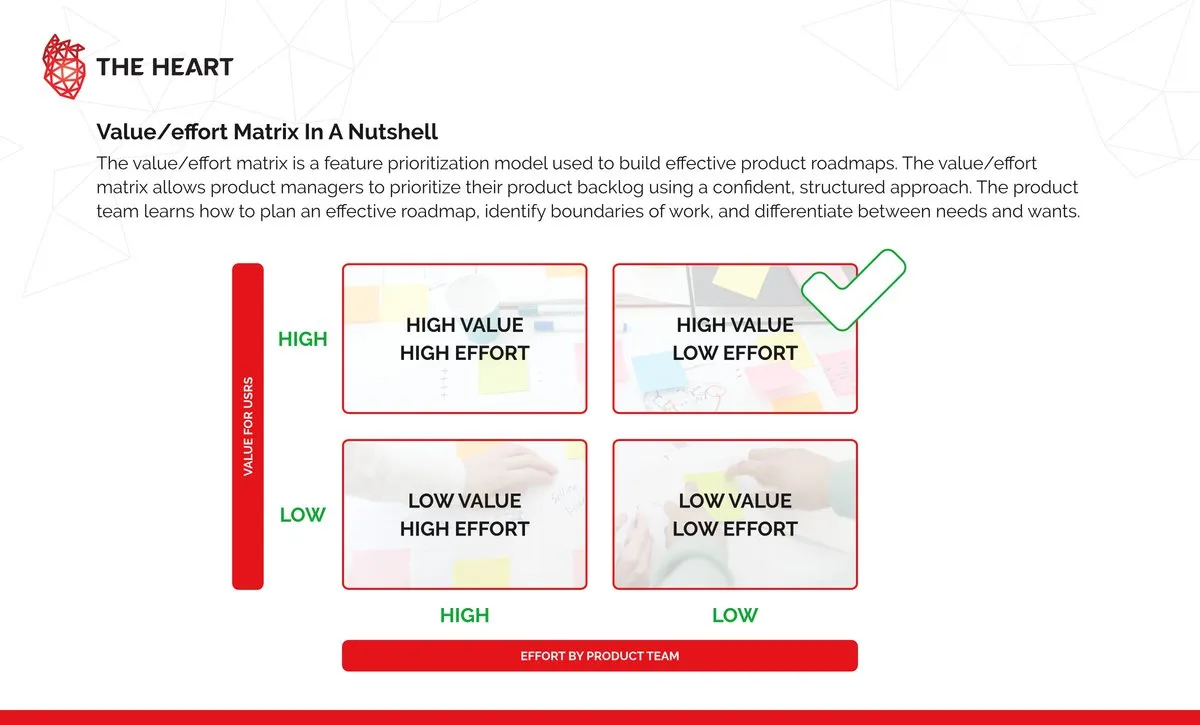
Selecting the right features for a Proof of Concept (PoC) is a critical step in the lean startup process. It is essential to prioritize features that represent the core value of the product, focusing on those that are both high-value and low-effort according to the value/effort matrix discussed in our previous article.
It is also important to check if there are any features that were not identified in the matrix or were designated as high effort/low impact but are very crucial for an app to function even in the PoC phase. For example, a registration and login module is necessary when the user needs to have a profile to complete some fundamental actions in the app. Sometimes simple integrations with external systems might be required.
The best person suited to help define the scope of the features in the PoC and further in MVP is the Product Owner.
How to Verify Your PoC
Once your PoC is ready, it needs to be tested using various methods, such as:
- Qualitative Research
Show it to your target users and interview them to understand their opinions. Make sure to include a diverse group of people and not just your close acquaintances. For example your mom ;) Here are some tips that might help you to gather the most authentic and helpful feedback:
- Provide Hands-on Experience: Instead of just showcasing your design during the interview, give users the chance to explore it at their own pace. Share a Figma link or any other prototype link with them and encourage them to use the product firsthand.
- Encourage Open Communication: Ask open-ended questions that encourage users to share their thoughts and impressions freely. This approach can often yield more detailed and nuanced feedback than simply asking yes or no questions.
- Avoid Leading Questions: Be cautious not to “prime” the users with specific questions that might steer their responses in a particular direction. You aim to gather unbiased feedback, so allow them to express their genuine opinions without any preconceived notions.
- Real-Time Feedback: Encourage users to vocalize their thoughts and impressions as they navigate through the prototype. It will provide you with insights into their initial reactions and thought processes, which can be incredibly valuable.
- Create a Comfortable Environment: Make sure the users feel comfortable and reassured that all kinds of feedback, both positive and negative, are welcome. This will help in getting honest and unfiltered opinions.
- Note Down Observations: Apart from listening to users' verbal feedback, take note of their non-verbal cues and behaviours while they interact with the product. Sometimes, actions speak louder than words.
- Follow-Up: After the initial interaction, give them some time to think about the experience, and then follow up with them to gather any additional feedback they might have upon reflection.
- Quantitative Research
Quickly launch advertising campaigns through Google Ads, Facebook, and Instagram, targeting your audience and directing them to a landing page. The number of interactions and sign-ups to a newsletter can be a great indicator of your concept’s potential.
From PoC to MVP: Validating Your Value Proposition
A successful PoC should validate if the idea of delivering the value proposition hypotheses is both feasible from a technical perspective and desirable to the target customers. If most of the hypotheses hold true, it’s a strong sign that you should continue developing your idea into an MVP.
But what if the majority of the hypotheses were not confirmed and were negatively verified?
- First and foremost, revisit each hypothesis critically to understand what went wrong. It might be due to flawed assumptions, unclear problem statements, or target audience mismatch.
- Next, the value propositions outlined in the previous stages should be re-evaluated to ensure that they are still aligned with the target audience’s needs and preferences.
- Reshape the scope of features of your PoC application according to assumptions. Another workshop discussed in the previous article might be necessary.
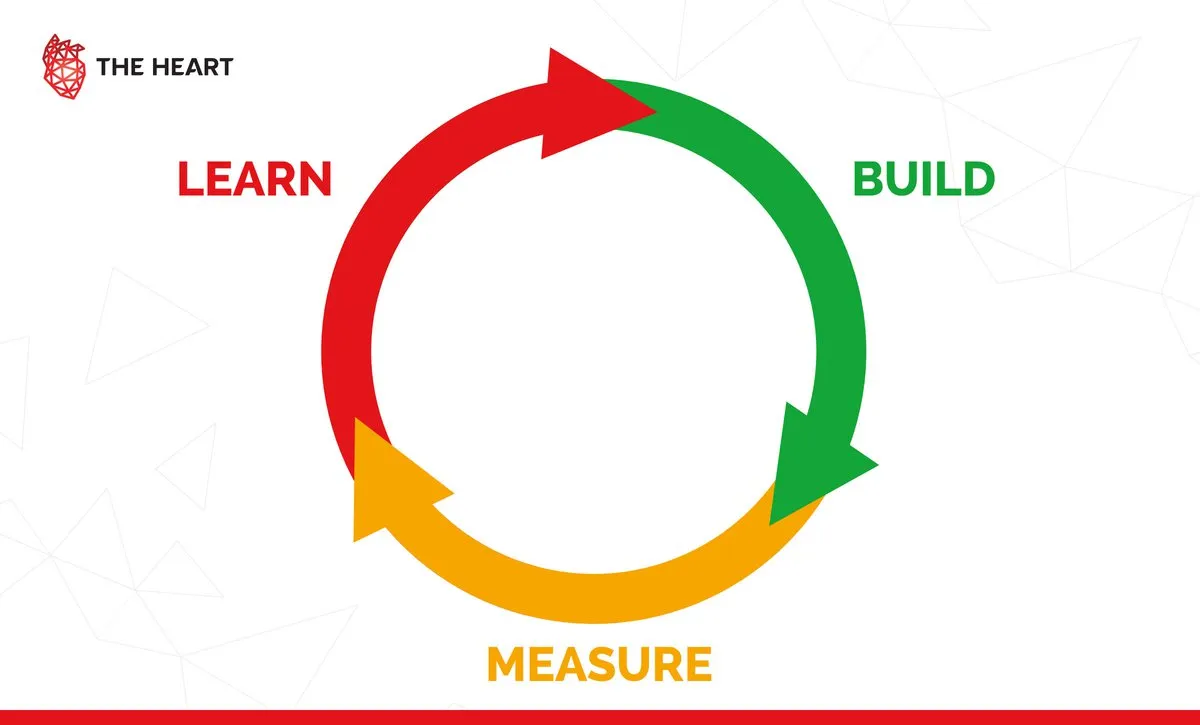
This exercise made step-by-step is called the BUILD-MEASURE-LEARN cycle and more about this concept you can digest here.
Lastly, remember that it is a crucial step to avoid investing time & effort further in a concept that might not be viable. Don’t be afraid to kill the project and move on to the next one. This is how innovation works. Only 1 of 10 ideas are worth further development. Also, the good news is that you didn’t do it old school way - engaging a lot of resources (time, people & money) to develop the final solution and then realize that the idea solves no problem and nobody needs it.
Recommended Readings and Conclusion
To deepen your understanding of this approach, consider reading "The Lean Startup" by Eric Ries and "Running Lean" by Ash Maurya. These books provide a comprehensive guide on how to effectively build a startup from the ground up.
In conclusion, developing a Proof of Concept is a vital step in the lean startup journey, allowing you to validate your product’s vision efficiently and at a low cost. Stay tuned for our next article where we will delve into the world of Minimum Viable Products.
What role can a venture builder play in shaping your Proof of Concept?
Conducting a PoC might be challenging. We believe that this foundational guide and advice will serve you well. Remember, the primary path to mastering these hands-on activities is through consistent practice - we wish you the best of luck!
If you are part of a large organization and tasked with establishing new enterprises, reaching out to corporate venture builders like The Heart could be beneficial. Such experts might help you and your team in such activities:
- Defining the most suitable experiments to validate your hypotheses. Venture builder experts have the acumen to pinpoint the experiments that will be most instrumental in substantiating your value propositions, ensuring that you are on the right track right from the start.
- Facilitating the testing process and elucidating the results. Venture builders assist in orchestrating systematic tests, and more importantly, they help in deciphering the results, providing clear insights and actionable takeaways that can guide subsequent stages of development.
- Assisting in pivoting strategies when initial assessments are invalidated. When the foundational assessments prove to be incorrect, VBs aid in steering the project in a new direction swiftly and effectively, helping to maintain momentum and avoid unnecessary expenditures of time and resources.
- Leveraging a dedicated PoC team to run multiple experiments concurrently. To expedite the validation process, VBs can deploy specialized PoC teams capable of conducting several experiments simultaneously. This approach not only saves time but also allows for a richer, more nuanced understanding of the various facets of your product through parallel testing avenues.
If you are facing any challenges related to PoC feel free to reach out to me via LinkedIn; I stand ready to assist you!
with The Heart?
Join us and be part of a team that's shaping the future through innovation, creativity, and bold ventures. Ready to make your mark?