

Creating a product vision, explained: design thinking methods with real-world examples

Table of contents:
- My recipe for impactful use of design thinking methods.
- What should you prepare before the workshop?
- How can you conduct a successful workshop?
- What next? Things you should be doing after the workshop.
- How can a venture builder help you create a product vision
My recipe for impactful use of design thinking methods
As a Venture Architect at The Heart, I’m responsible for refining ideas into product concepts which later create the foundation of a startup's offering. There are many steps to this process, but my favourite methods in my toolbox all involve design thinking philosophy. In this episode of our Corporate Venture Building Guide, I’d like to shed some light on when and how we put them to work, including tips and comments from Sergiusz Sawin, a Partner at The Heart with extensive facilitation experience.
Let’s start by establishing when it is a good idea to use design thinking methods:
- You have a general sense of great opportunity within a set space but need to come up with ideas of how to capture it. You can read more about generating and assessing ideas in other articles from our Corporate Venture Building Guide.
- You have identified pain points but don’t yet know how to address them.
- You have found an idea, assessed it or even performed first validations, but don’t know how to define your product.
Naturally, there are many other cases when conducting such a session will be a good step forward towards your project goals. The goal of our article is to provide you with a general framework for various purposes and situations. We have structured this in three parts - before, during and after the workshop.
What should you prepare before the workshop?
Most meetings would benefit from thorough preparation, but it’s essential when organising and facilitating workshops. Lack of clear goals, team mismatch, wrong format, and no prior input or thought-through agenda will result in a frustrating experience or even drown your whole project. Let’s address these aspects one by one.
Define the goals
Remember that design thinking methods are not the goal in itself, but a path towards it. Make sure to consider the goals of the session (outcomes and deliverables you have created during it) in the larger context of our project goals (desired stage of the product or service you’re developing.
Possible outcomes of a workshop defining project vision include (from most conceptual to most concrete):
- Value proposition hypothesis: Assumptions to be verified during design work on how a solution delivers value to its users. It can follow the structure of We believe we will achieve [business outcome], if [the persona], solves their need in [user outcome] using [feature].
- Elevator pitch statement: A concise, persuasive text that clearly communicates the unique value proposition of an idea, product, or business - originally to be pitched during the time of an elevator ride. There are multiple templates available suited to various products and purposes. We at The Heart like to use this one: FOR [target customer], WHO HAS [customer need], [product name] IS A [market category] THAT [one key benefit]. UNLIKE [competition], THE PRODUCT [unique differentiator].
- List of functionalities: These can take the shape of more detailed user stories, high-level descriptions or even creative forms like storyboards.
- First mockups: If the input concept is concrete enough or time allows for a few-day workshop, the product vision can be taken as far as first mockups presented as wireframes.
Think about participants to invite
The exact team varies and always depends on the project setup and goals, but as a rule of thumb rather than people you can think of the following roles to be present during the session. An individual can fulfil two at most, but it's always best to have at least one per role. In some situations, they can take part only in a portion of the agenda, for example, the project sponsor can be there just for an introductory briefing about the project goals.
- Facilitator - someone who briefs and debriefs activities, following the agenda and maintaining the right flow, energy and creativity levels. Public speaking and interpersonal skills are highly valued in this role. It’s important for the facilitator to be experienced enough to decide on changing the agenda on the spot if needed to realise key workshop goals if things deviate from the plan (and they always do). A good facilitator does not have to be an expert in the project’s subject, but this too can be helpful in more complex fields. What’s more, this does not have to be you - finding a good facilitator inside the organisation or externally just for the workshop might prove more productive than taking this role upon yourself.
- Time-keeper - unsurprisingly, someone who keeps the time. This role can be assigned to different participants on the activity-per-activity basis, but it should not be someone actively participating. If the facilitator has enough experience and no other roles, they can do it themselves but it’s always good to have one less task to remember.
- Project sponsor - the presence of a project sponsor during the workshop can make outcomes more understandable to decision-makers and your life easier than pitching project results in your organization.
- End-user perspective - someone who represents the voice of the actual users of the product. This can be achieved by having actual end-users in your session, someone who has frequent contact with them in the context of the product or at the very least someone who has deeply researched this customer segment. Their feedback offers a reality check, ensuring that the product vision isn't just theoretically sound but practically valuable.
- Subject matter expert - someone who has deep knowledge in specific areas related to the product, whether it's industry insights, technical aspects, market trends, or regulations. They can provide detailed information, correct misconceptions, and enhance the depth of discussions ensuring the credibility and doability of the product.
- External perspective (optional) - someone outside of the core project team who can offer a fresh set of eyes, potentially seeing opportunities or challenges that might be overlooked. Desired skills for them include curiosity, creativity and the ability to challenge assumptions.
As for the maximum group, we can turn to Amazon’s two-pizza rule to not lose effectiveness. For most activities, it’s good to divide participants into smaller groups of 3-4 people to work parallelly on e.g. different personas and make their input focused and concise.
Decide on the format - in-person or online
In our experience, a well-planned in-person workshop is always worth the investment due to superior efficiency, quality of output and unmatched ability to bring all participants on the same page.
If extreme geographical distance prevents it, online sessions should be treated as a fallback. In this case, make sure participants have their cameras on and foster interaction between them to make up for a less rich medium. Activities facilitated remotely should have longer buffer times and be realised through a collaboration tool all participants have access to (do check it as many websites are blocked on company browsers!). We recommend Miro which provides various useful workshop functionalities and advises testing functions participants need to use on simpler activities such as icebreakers.
Do (and share!) your research
Think about a workshop as a method to transform input into outcomes, the quality of the former dictating the usefulness of the latter. Any prior research regarding benchmarks, inspirations, target group analysis, market sizing, etc. can be very valuable.
Compile all the information in a nutshell, ideally as slides or a document to keep it relevant. Additionally, make sure to include its preparation in your project timeline and set aside necessary resources - in our experience this usually comes to a week of analyst’s work.
However, no research is useful if it doesn’t reach the participants. Make sure to share it at least 2 days prior to the session itself and during the workshop present just the summary of the most relevant points.
Create an agenda with a good flow
A few general principles when constructing the agenda are to make sure activities connect in a logical flow, provide enough buffer time for each of them (at least 20%) and offer a variety of formats to prevent fatigue. Most importantly, your agenda should include a couple of key activities that will directly result in desired workshop outcomes. These can feature:
- Personas - this tool humanizes your audience. By creating fictional representations of your users, based on real data and research, you get a clearer picture of their behaviours, needs, and motivations, leading to more user-centric solutions.
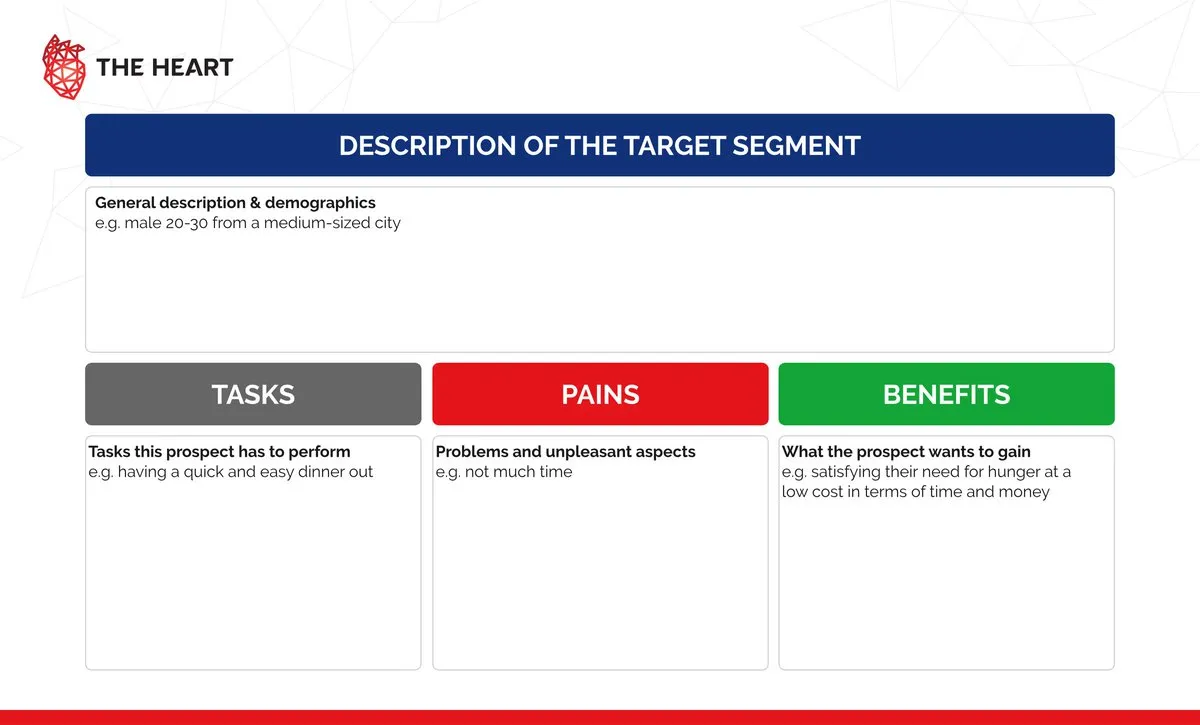
- Customer journey map - this notes the step-by-step journey each of your user groups takes performing either current jobs your products should support (AS-IS) or jobs using your product (TO-BE). It allows teams to identify touchpoints, emotions, and experiences, ensuring a holistic understanding of the user's needs and can create a base for other activities.
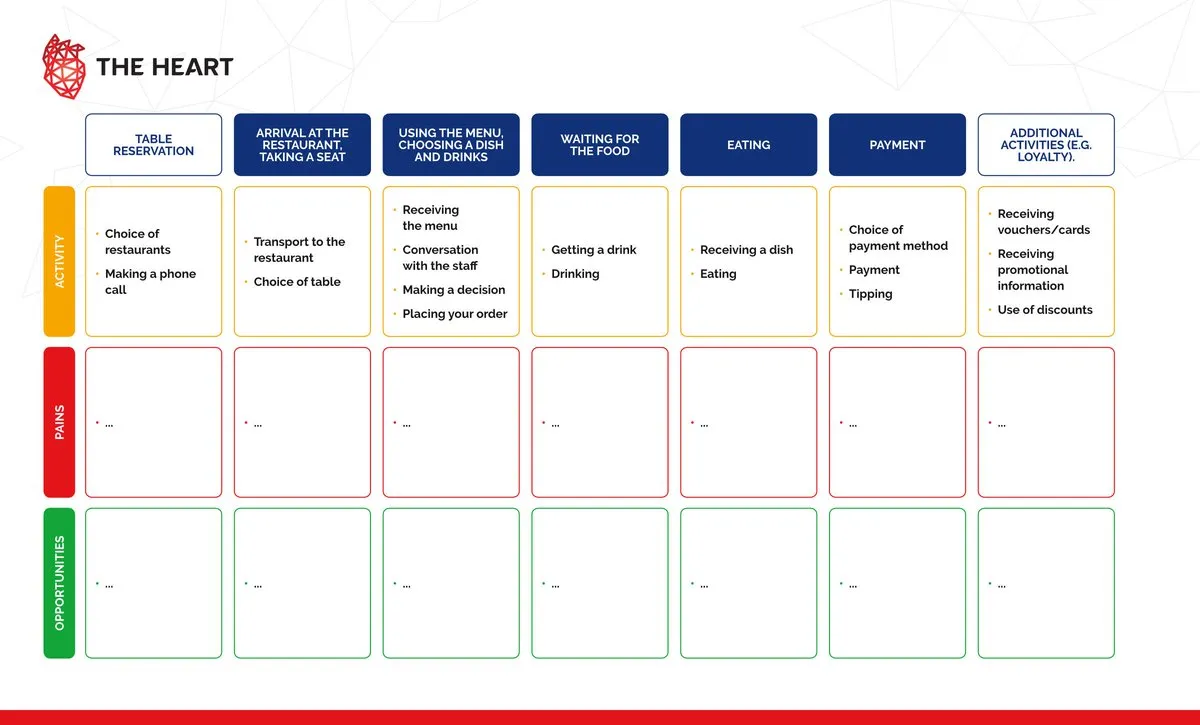
- Pains & gains canvas - illustrates the relationship between the customer's needs and the value your product can offer, often in the context of jobs (functional, social or emotional tasks) they are performing. It can be expanded during or after the workshop using Osterwalder’s Value Proposition Canvas
- How might we - a constructive brainstorming prompt, "How might we..." encourages open-ended questions and divergent thinking. By reframing challenges into opportunities, HMW facilitates creative problem-solving and sparks innovative solutions for better product development.
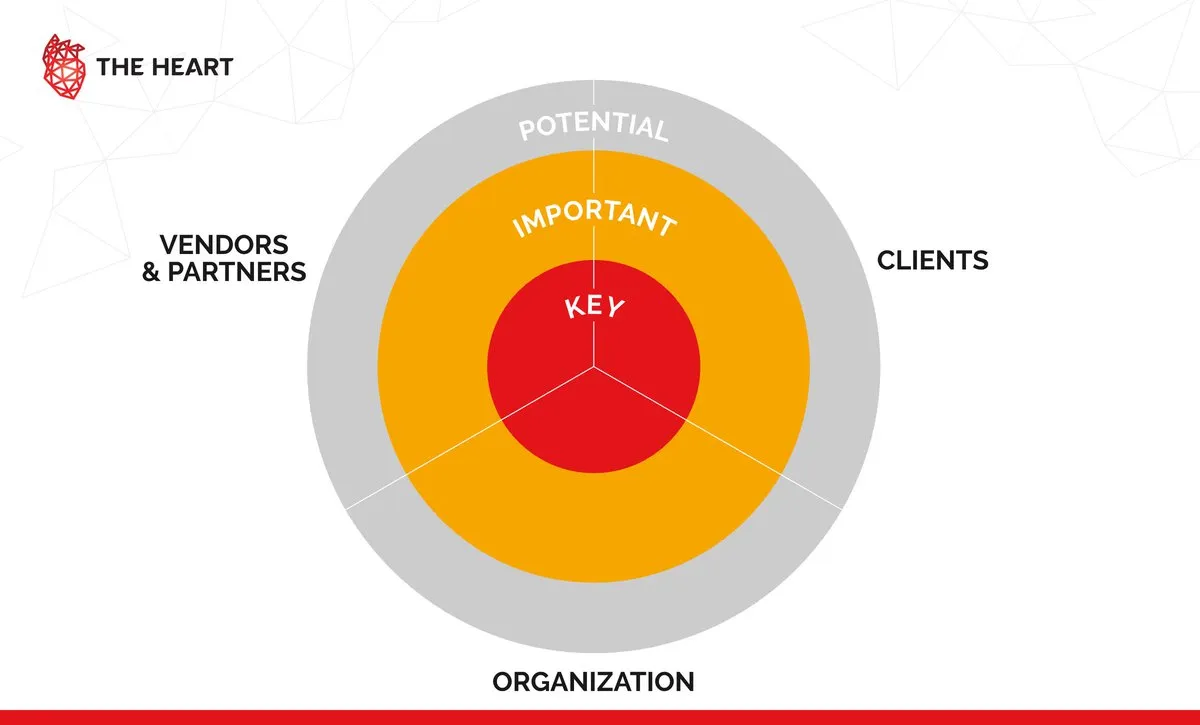
- Stakeholders map - a visual tool that captures all the entities (individuals, organizations) influenced by or influencing your product. By mapping stakeholders, teams can recognize primary influencers, foresee potential roadblocks, and create alignment between multiple parties.
- Elevator pitch - we have previously explained our favourite structure, but for the purpose of an activity it can be simplified. During a session, it can be a task for smaller groups who at the end pitch it to other participants.
Don’t forget to plan the transition between activities. Even if you end up facilitating it differently, this will help you in making sure there’s a logical connection between all elements of the workshop and that ideally outcomes of one exercise feed into the next one. If you’re facilitating a longer session with multiple outcomes, a good idea is to create a canvas with space planned for each activity which slowly fills up during the session.
How can you conduct a successful workshop?
Icebreakers & inspiration
For the duration of the session, participants form a team with a common goal - all group development stages are applicable here. To get off on the right foot, let’s provide them with a short and relevant icebreaker, e.g. “Describe your most memorable experience in a restaurant” at a workshop for the HoReCa field.
We usually think of an ice-breaker as a tool for the participants to get to know each other. However, it should also serve as an exercise allowing the team to enter the right state of mind for workshop work. Even though it is just a very early stage of the workshop, with the right task we can stimulate out-of-the-box thinking, bring the energy level up, and create a unique bond and an atmosphere of trust within the team. On the one hand, participants can learn some new things about each other, but we can also collect some initial input on the topic of the session.
Once, I was facilitating a session aimed at developing a new concept of chocolate bar. Before the workshop we asked the participants to bring two things to the session: their favourite bar and the printout of the chocolate product ad they particularly like. During the session, each person had to present what they brought and explain why they chose these particular items. Some told stories from their childhood. We learned quite a lot about each other and sharing the sweets with colleagues was a great start to the session. Additionally, the discussion about ads allowed us to collect inspiration for the upcoming value proposition session.
Facilitation
To create an engaging and interactive workshop, encourage active participation from the start. Use open-ended questions to stimulate discussions and invite individuals to share their insights and experiences to allow for a diverse range of perspectives. Acknowledge and validate each participant's contributions to create a supportive and inclusive environment. Make sure that the brief for each activity is as clear as possible, providing examples and clarification in case of doubt.
Experienced facilitator is one of the keys to a successful session. This demanding role requires, on the one hand, the skills of a police officer and a kindergarten teacher, on the other hand, during the session you have to act like an airplane pilot leading your group safely to the final destination. To make matters worse, the facilitator sometimes is like a conductor ensuring that everybody plays with notes but also from time to time becomes a jazz player improvising when things do not go as planned. Sounds impossible? Do not worry, after a hundred facilitated sessions, it is not a challenge any more :)
Sergiusz Sawin, Partner at The Heart
Time-management
While it’s essential to remain flexible to accommodate unexpected discussions or participants’ needs, it’s equally crucial to maintain discipline regarding time limits for each activity. Gently guide discussions back on track if they start to digress significantly. Make sure to alert participants when half of their time for their own activity has passed and when one minute is left. During group work, you can ask each group about the progress and adjust the timing for everybody or limit the scope of the exercise.
In my twenty years of experience in conducting workshop sessions, I can honestly admit that only a couple of times the workshop session was run exactly in line with the agenda. Do not be too detailed in planning every quarter of the session as you will for sure run out of time at one point or another. People will engage in side discussions with limited relevance to the topic, they will be late after breaks, and some people, when given a minute for comment, will use five times more (I love these folks!). I’d rather be sceptical about how much you can do during a single day than over-optimistic. It is much wiser to plan two sessions instead of one, rather than running from the start to the finish line like a man walking on hot coals. And always plan a thirty-minute wrap-up session at the end. It probably won’t be used for wrap-up but will be your buffer for accumulated delays from previous parts of the agenda.
Sergiusz Sawin, Partner at The Heart
Presenting results & choosing
Participants may use a variety of techniques to present the results of their work, ranging from a standard presentation by the flipchart, through a gallery to a silent discussion where they go around flipcharts hanged in the room and provide comments on postits. If a choice has to be made e.g. for the most valuable functionality, idea or design they can use dots voting or simulate an investment situation where everyone is given a pool of money - using Monopoly banknotes can provide a nice creative touch.
Presenting results is like reaching a summit after a long walk towards the top. Everybody is usually very tired by this point but also knows that is not the end of the road. Make it special so that they feel they achieved a lot during the session. Recognise their hard work and celebrate. At this stage, I usually create the atmosphere of a “grand finale” asking the teams to present their ideas during a contest of some sort. Give them some time to prepare the scenario, and encourage them to present as a whole team. Make sure that there is silence in the room when they are “on stage”. Your role as a facilitator is to acknowledge their contributions, highlight the strengths of each concept, and encourage applause after presentations. When working with external participants, after voting, you can prepare a small gift for the winning teams. I like to select gifts that can be shared with others, e.g. a box of chocolates. That way, winners can share their prize with the rest and every workshop participant gets some small reward for their contribution.
Sergiusz Sawin, Partner at The Heart
What next? Things you should be doing after the workshop
You did it! The workshop went well, participants are happy and you have reached your key outcomes. Job done? Not yet. Now comes the most overlooked, but equally important task of summarising the session, setting the next steps and using the output to achieve your project goals.
Here are a few tips for following the session up:
- Create a calendar of tasks - use a calendar to assign clear tasks and deadlines to participants and other teams. This can be done as one of the final workshop activities
- Take pictures of all materials - you never know then an idea on a flipchart might prove to be useful. From many apps available we have seen Genius Scan do the best job and most phones offer decent OCR from photos. It’s also worth hanging a key flipchart (e.g. with elevator pitch) in your team space as a reference.
- Send a short actionable summary to participants - don’t wait weeks to send long paragraphs with everything that happened. Summarise key outcomes and next steps in an email on the next day to keep the momentum and after session notes or summary document/presentation is ready, share them alongside pictures
Depending on the workshop goals and outcomes, we can recommend these steps to take it further:
- Value proposition hypotheses should be validated with end-users through methods such as interviews, focus groups or questionnaires to determine the actual value for them. You can read more about validating venture ideas in our last edition of our Corporate Venture Building Guide. With the help of benchmarks, customer research and product & UX experts they can easily become great product functionalities.
- Elevator pitch statement works great as a general guide helping everyone understand what the vision is. Each element can be further validated and refined. While it is always good to keep end-users in the loop, be mindful that a full statement might be too complex to precisely assess e.g. when designing customer research.
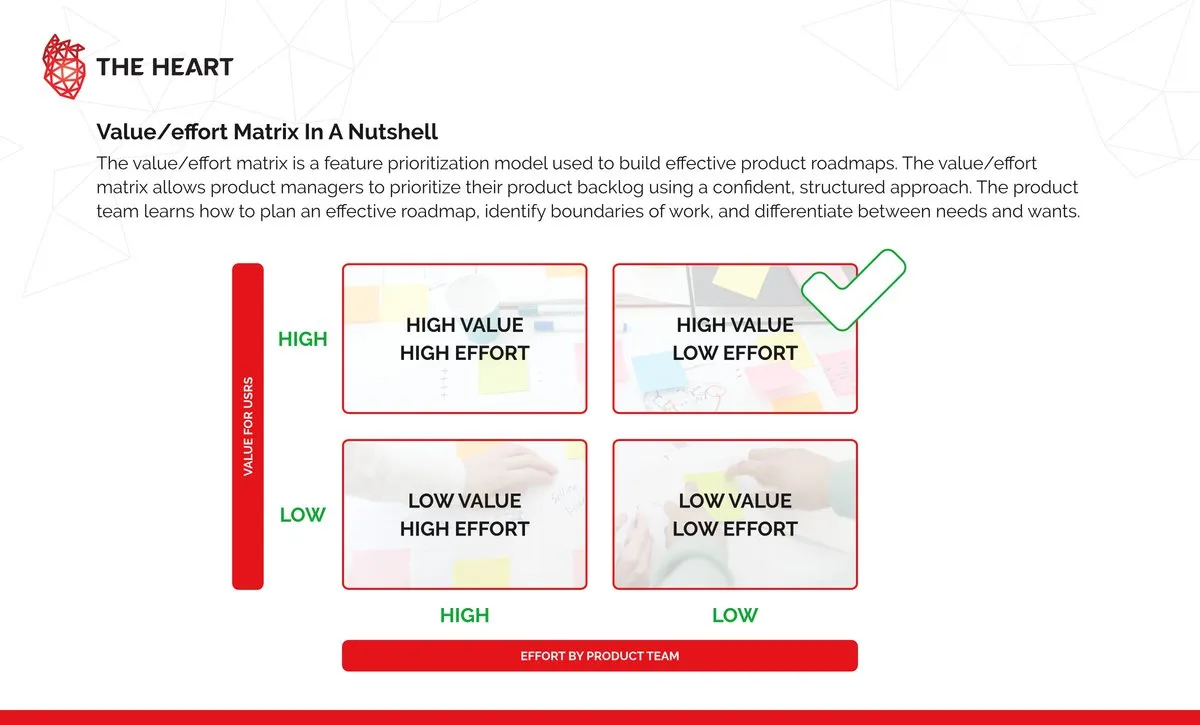
- A list of functionalities should definitely be shown to end-users for validation and assessment. Your product team should also evaluate the effort necessary to develop them. To prioritise and create a product roadmap, a value/effort matrix is a great tool.
- First mockups are to be passed on to the UX/UI Team in the form of wireframes, ideally accompanied by an elevator pitch or other outcomes. Resulting screens should then be given to end-users for feedback, e.g. during IDIs.
With the product vision set, we have a solid base for the next stages in the venture building process - Proof of Concept where more difficult to validate hypotheses are tested using prototyping and Minimum Viable Product Development, where the first version of the product is created. We will make sure to cover them in detail in our next Corporate Venture Building Article. Stay tuned!
How can a venture builder help you create a product vision?
Workshop facilitation, design thinking and product design can be broad and complex topics. Even though we have scratched the surface, we hope you will find this general blueprint and tips useful. As all activities are practical, the only way to get better at them is to… practice - good luck!
If you are in a corporation and find yourself setting up a new business, contact a corporate venture builder such as The Heart to provide you with a facilitator or support in planning, executing and following sessions. They bring structure, market orientation, and a practical mindset, ensuring that ideas aren’t just generated but also contribute to achieving your goals. If you have a workshop-related challenge, don’t hesitate to send me a LinkedIn message - I’ll be happy to help!
Should you want to expand your workshop toolbox, here are some additional recommendations:
- Design thinking methodology and library
- Strategyzer’s canvases and other tool
with The Heart?
Join us and be part of a team that's shaping the future through innovation, creativity, and bold ventures. Ready to make your mark?