

Moving from Proof of Concept to Minimum Viable Product: When and Why?


Table of contents:
- Understanding the MVP.
- PoC vs. MVP.
- Criteria for Moving from PoC to MVP.
- The Role of the Product Owner in MVP Development.
- Technical aspects.
- Launching MVP.
- How Venture Building Can Assist Corporations in Executing a Successful MVP?
Understanding the MVP
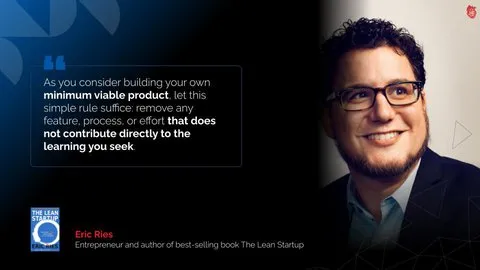
In the realm of product development, the concept of the Minimum Viable Product (MVP) has given businesses a new method. Which is faster, more reliable, and less resource-consuming for creating innovations that can provide companies with new revenue streams and maintain their position as market leaders. Eric Ries, in his bestseller book "The Lean Startup", profoundly remarked, "As you consider building your own minimum viable product, let this simple rule suffice: remove any feature, process or effort that does not contribute directly to the learning you seek." This perspective underscores the purpose of an MVP: to create a product that, with the least possible resources, serves the main problems of its intended user base.
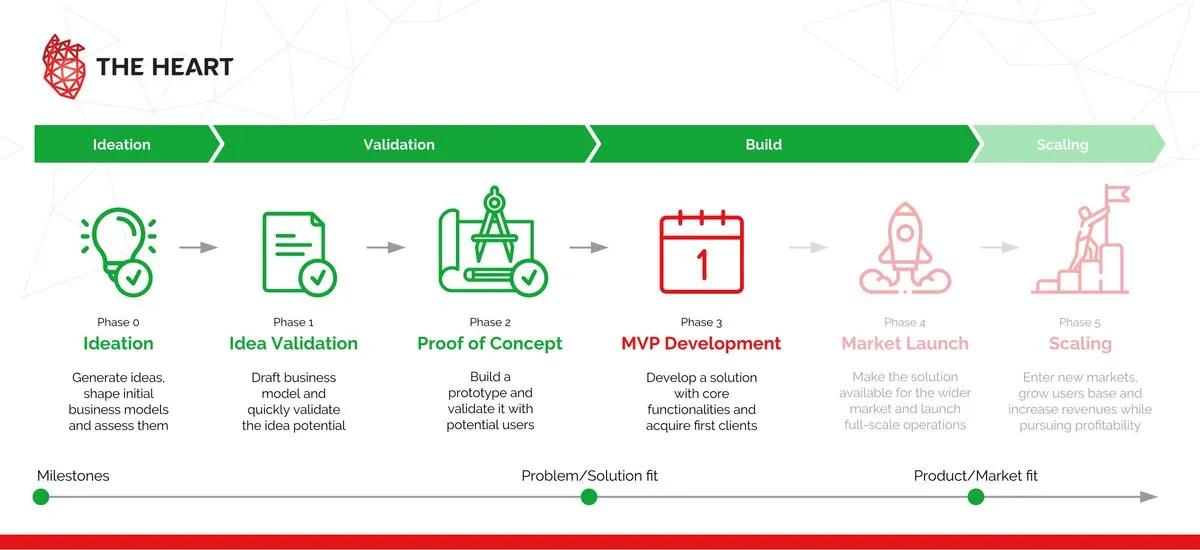
PoC vs MVP
To proceed further, it's essential to clarify the difference between PoC and MVP, as these terms are often confused and lead to misunderstanding.
Proof of Concept (PoC): This is an initial stage where a specific idea or concept is tested for feasibility. It's the prototype stage where businesses validate whether the concept can become a product that clients will be willing to pay for.
Minimum Viable Product (MVP): Building upon the insights from the validation phase, an MVP is a product with a minimum set of features that make it usable for early customers. It aims to provide immediate value, quickly, while minimizing development costs.
In essence, PoC tests the idea, and MVP brings the validated idea to the user.
The MVP, by its very nature, should be lean. However, while creating an MVP with or for corporations, we've uncovered several dependencies that need to be taken into account:
- Regulatory Compliance: Corporate MVPs often require additional features to secure compliance with both internal corporate regulations and external legislative rules. This might include data protection features, account deletion capabilities, or cookie policies.
- Polished UX/UI: While MVPs in the startup world might get away with rudimentary designs, corporate stakeholders often expect a higher degree of polish in terms of user experience and interface.
Integration with Existing Systems: Corporations usually have legacy systems in place. The MVP might need to integrate seamlessly with these systems, adding a layer of complexity.
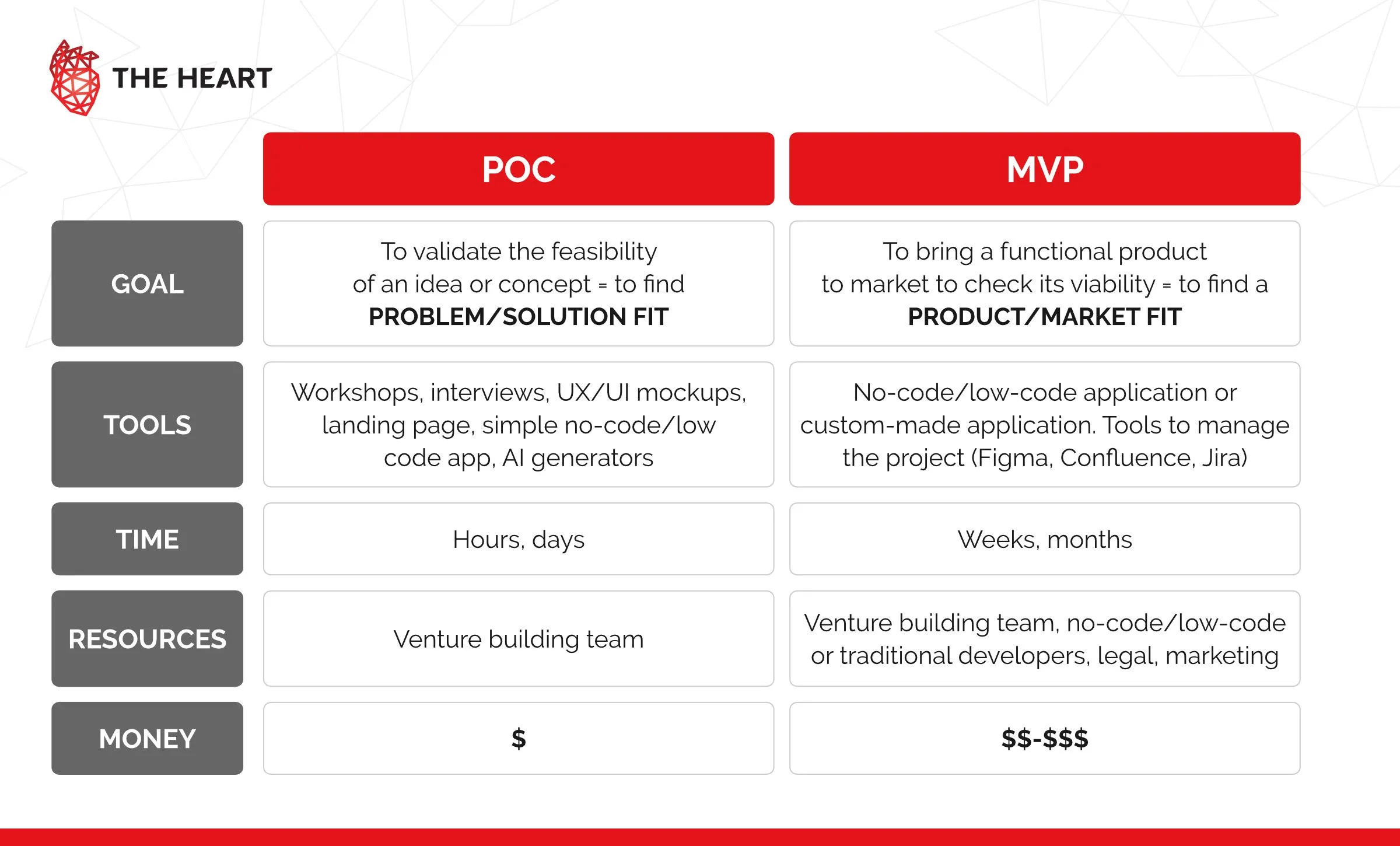
What is the PROBLEM/SOLUTION FIT and PRODUCT MARKET FIT goal?
The first ensures that the project is on the right track in terms of finding unique and not yet discovered solutions to the problem that users are tackling. The second indicates that the project is ready to scale and grow in the market.
In simpler terms:
Problem/Solution Fit: "Have we built a solution that addresses the problem?"
Product/Market Fit: "Is our solution scalable and does it meet the demand in the market?"
Criteria for Moving from PoC to MVP
The transition from PoC to MVP is more than just a developmental phase. It's a strategic decision based on:
- Positive Hypothesis Verification: All the foundational beliefs and assumptions about the product need to be validated positively in the PoC phase.
- Achieving Problem/Solution Fit: The validated idea reached its sweet spot where user needs meet the product's offerings.
- Endorsements: In a B2C setting, a significant portion of the target demographic should express interest in the product. In a B2B context, this validation often comes through Letters of Intent from potential business clients, signaling their preliminary commitment to paying for the product as soon as it is ready.
The Role of the Product Owner in MVP Development
In most cases, the Product Owner is responsible for the transformation of hypotheses into tangible app requirements - both functional and non-functional. They ensure the app aligns with MVP principles while satisfying any corporate-specific requirements, translating into the potential addition of extra features.
Pinning down the most crucial functions should be intuitive based on verified hypotheses. The Pareto principle, or the 80/20 rule, can offer some guidance here. In the MVP context, it might suggest that just 20% of the defined features will satisfy 80% of prospective clients' needs.
Technical aspects
While a PoC might not always require coding, an MVP often does. However, advancements in no-code/low-code platforms have provided an alternative, more agile path to MVP development. The choice between traditional development and these platforms again rests with the Product Owner, given their holistic understanding of the MVP's requirements.
Comment from an expert:
In the rapidly evolving digital landscape, the right balance between speed and quality of delivering a working product often determines its success or failure. The traditional development process, characterized by long timelines and significant expenses, is often at odds with the need for swift product release and market validation, both in the PoC and MVP phases. This contradiction has led innovators to use a different approach which is more in line with the Lean Startup methodology and allows for rapid iteration and customer-driven development.
This is where no-code tools come into play. No-code platforms provide a revolutionary solution, democratizing app creation. Businesses, regardless of their technical know-how, can swiftly create an MVP and directly test it with potential users. This immediate feedback loop is invaluable. Before sinking resources into extensive (and expensive) development, one can quickly assess if there's a genuine market demand and willingness to pay, and gather insights to refine the product further. Notable startups have already employed no-code tools, some even reaching impressive valuations. For example: Comet (€14 million raised in Series A in 2018), Teal ($11 million raised from City Light Capital, Flybridge Capital, Oceans, Human Ventures, and many more.), Qoins ($2.3m funding in total to date).
There are several advantages of the no-code approach:
- Speed: Fast-track product development and market validation.
- Flexibility: Easily iterate based on feedback without delving into complex code revisions.
- Cost-efficiency: Minimise upfront development costs.
- User-centricity: Direct, rapid feedback channels enhance user-driven development.
However, like all tools, no-code platforms have their limitations. They might not be as detailed or customizable as code-based solutions and may not scale as quickly as needed for fast-growing startups. Another significant concern worth mentioning is the potential vendor lock-in. Although some of the no-code tools allow for code export (e.g. Webflow or FlutterFlow), it’s not the case for all of them. Thus, migrating to code-base solution or a different no-code tool might become both technically and economically challenging. This dependence makes no-code platforms’ users vulnerable to potential changes in platform pricing, terms of service, or even discontinuation. As the software house or startup doesn't own the entire code, IP rights might pose another challenge.
Yet, it's essential to clarify that no-code doesn't replace programming in the long term. Instead, it complements it. Assuming the product is validated and properly tested with end customers and there's a need for a codebase solution, coders can focus on intricate solutions, while leaving basic tasks like creating landing pages, automating customer support processes or even creating internal tools to, so-called, citizen developers equipped with modern no-code tools.
In conclusion, no-code tools, aligned with the Lean Startup philosophy, are reshaping the way digital products are tested and refined. By enabling quick, user-driven iterations, they ensure that products launched are genuinely in line with market needs, thereby minimizing waste and maximizing value.
Launching MVP
For an MVP phase to launch and potentially seek financing—either externally or within a corporation—it's essential to:
1. Identify a founder or a leading figure.
2. Have a delineated team, spanning development, marketing, and other roles specific to the service in question.
3. Clearly define the MVP's scope and the budget required.
In the next article, we will write more about it.
How Venture Building Can Assist Corporations in Executing a Successful MVP?
In the dynamic and evolving business ecosystem, corporations often find it challenging to rapidly innovate and introduce groundbreaking products to the market. With the support of a venture builder, a company specializing in building startups, many areas that would demand significant effort within a corporation can be outsourced. Including in such areas as:
- Expertise in MVP Development: With their vast startup incubation background, venture builders offer unique knowledge in MVP design and launch.
- Resource Allocation: Ensuring optimal resource utilization can be a significant challenge for corporations. Venture builders employ agile methodologies, ensuring that MVP creation adheres to set budgets and timelines.
- Cross-functional or created from scratch Teams: Creating a successful MVP demands a mix of competencies, from product conception to market strategizing. Venture builders can rapidly mobilize multifunctional squads, guaranteeing comprehensive expertise for every aspect of the MVP, or build from a scratch dedicated team.
- Risk Mitigation: An extensive list of risks makes corporations less willing to pursue innovation. At the same time, only innovation can ensure new revenue streams and growth for them. Venture builders, drawing from their extensive experience, can predict potential roadblocks and offer counterstrategies, ensuring a smooth MVP journey.
- Securing Financing for MVP: One of the biggest challenges can be sourcing funds to start a new venture. Venture builders step up by taking responsibility for scouting for investors and securing the funding.
- Building a Dedicated Team: As the MVP progresses and scales, the need for a devoted team becomes a challenge. Venture builders excel in identifying and rallying talent, ensuring that a dedicated and proficient team propels the MVP through its growth phases.
- Leveraging External Networks: Venture builders have a rich network of experts from technological allies to potential backers. This network can be used to equip the MVP with the latest tools, the best people with founder mindsets, platforms, and even an initial user base.
In summation, corporations aiming for a seamless transition from a nascent idea to a market-ready MVP will find a venture builder partnership invaluable. This alliance not only ensures MVP success but also sets the stage for future scalability, market penetration and dominance.
Tomasz Wilczak
PRODUCT OWNER & NO-CODE/LOW-CODE DEVELOPER
If you are facing any challenges related to MVP feel free to reach out to me via LinkedIn; I stand ready to assist you!
with The Heart?
Join us and be part of a team that's shaping the future through innovation, creativity, and bold ventures. Ready to make your mark?